
Wind Turbines
Capturing the Energy of Moving Air
Wind energy is the world's fastest-growing electricity source. RENERVISION delivers complete wind farm development — from resource assessment and permitting through to construction, grid connection and long-term operation.
The Technology
Behind the Power
A step-by-step look at how the technology converts a natural resource into clean electricity.
Aerodynamic Lift
Wind turbine blades are precisely shaped aerofoils. As wind passes over them, a pressure difference is created that generates aerodynamic lift, causing the rotor to turn. Modern 3-blade designs maximise efficiency while minimising fatigue loads.
Mechanical Transmission
The rotor hub turns a main shaft. Gearbox-equipped turbines step up the low rotational speed (~15 RPM) to ~1,500 RPM for the generator. Direct-drive turbines eliminate the gearbox entirely using permanent-magnet generators, improving reliability.
Power Generation
The generator converts rotational energy into 3-phase AC electricity. Power electronics and transformers condition the output to match the grid frequency and voltage. Turbine output is continuously optimised by yaw and pitch control systems.
Grid Connection & SCADA
An onsite substation collects output from all turbines and steps voltage up for transmission. SCADA systems provide 24/7 remote monitoring, fault detection and performance reporting across the entire fleet.
Why Choose
Wind Turbines
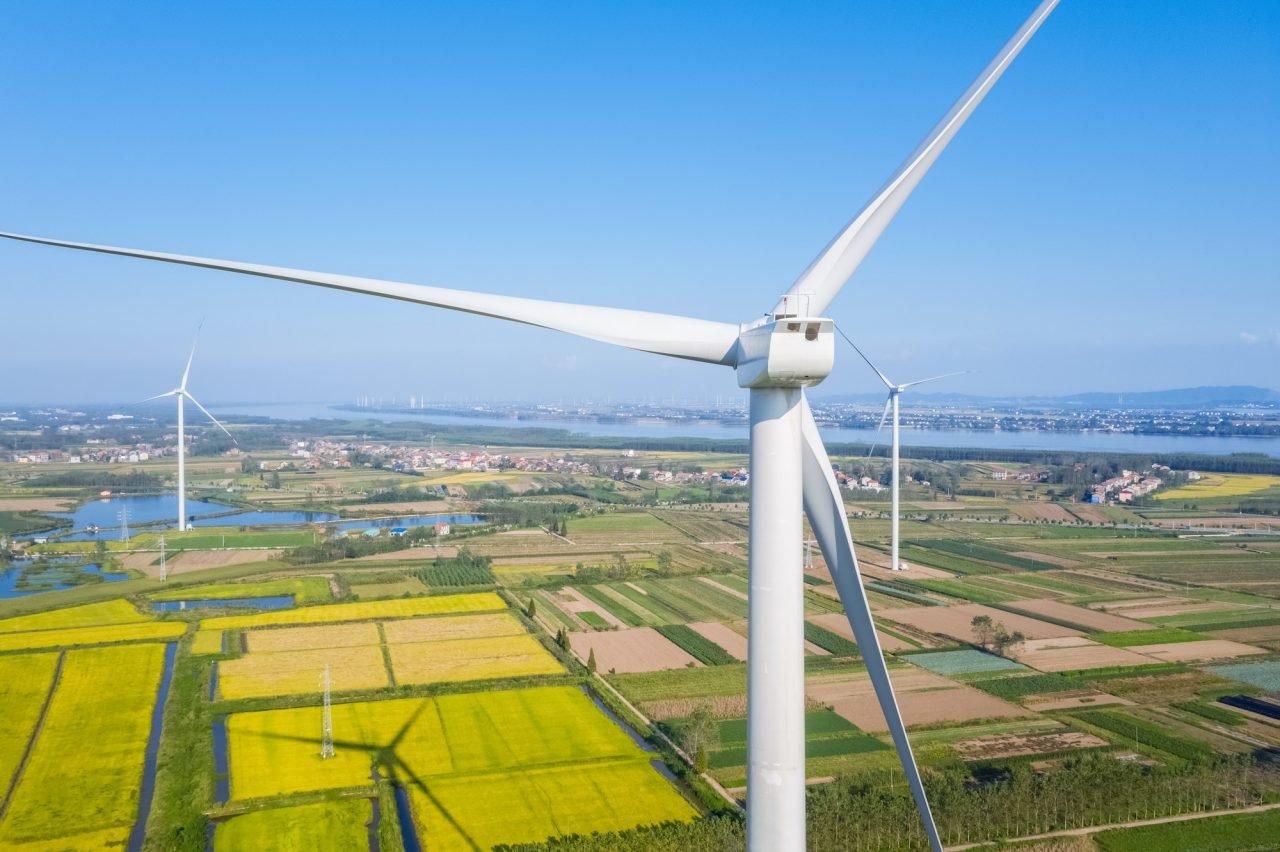
No Fuel Costs
Once built, a wind turbine's primary energy source — wind — is free. This makes operating costs predictably low and protects revenue from fuel price volatility.

High Capacity Factors
Offshore wind sites routinely achieve capacity factors of 45–55%, far exceeding solar PV in northern European latitudes. Premium onshore sites reach 38–42%.

Small Land Footprint
A wind farm's actual surface occupation (turbine bases, roads) is only 1–2% of the total area. The land between turbines continues normal agricultural use.
Fast Construction
A 50 MW onshore wind farm can be fully operational within 12–18 months of permit award — one of the fastest routes to new generation capacity.

Long Asset Life
Modern turbines are designed for 25-year service lives. Repowering — replacing ageing rotors with larger, more efficient models on existing foundations — extends viable life further.

Complementary to Solar
Wind and solar generation profiles are naturally complementary: wind tends to peak in winter mornings and evenings when solar is low, making a hybrid portfolio highly consistent.
Capacity Factor by Technology
Annual average capacity factor (%) — European conditions
Sources: IRENA Renewable Power Generation Costs 2024; IEA World Energy Outlook 2024; JRC European Commission data
Ready to invest in
Wind Turbines?
Our team will assess your site, model the financials and guide you through every step — from feasibility to full operation.