
Geothermal Energy
Baseload Power from the Earth's Core
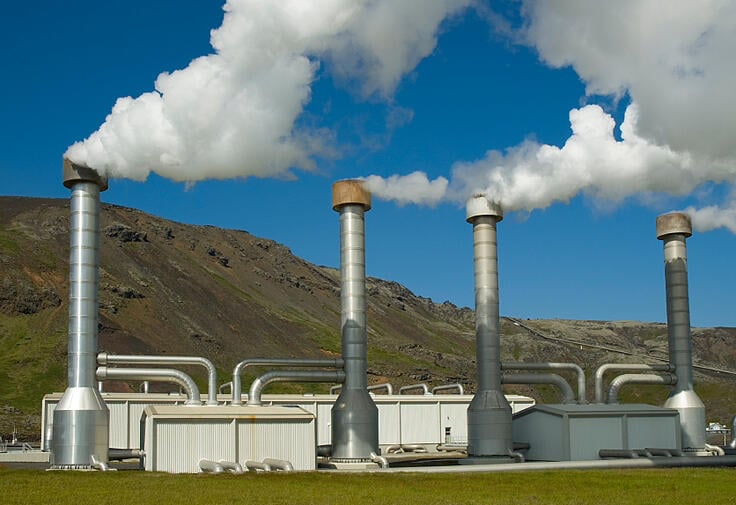
Geothermal energy taps the Earth's internal heat — a virtually inexhaustible resource available 24 hours a day, 365 days a year. RENERVISION develops geothermal projects for both electricity generation and direct heating applications across geologically active European regions.
The Technology
Behind the Power
A step-by-step look at how the technology converts a natural resource into clean electricity.
Resource Assessment
Geothermal potential is mapped via seismic surveys, gravity studies and temperature gradient analysis. High-enthalpy resources (>150°C) suitable for electricity generation occur in volcanically active zones; low-enthalpy resources (30–150°C) for district heating are found across much of Europe.
Well Drilling
Production wells are drilled to depths of 1–5 km to reach the geothermal reservoir. Directional drilling allows multiple wells from a single pad, minimising surface disturbance. Injection wells return cooled water to the reservoir, ensuring sustainability.
Power Conversion
High-temperature steam (dry steam or flash plants) drives turbines directly. For lower temperatures (70–150°C), binary cycle plants use a working fluid with a lower boiling point (e.g. isopentane) in a closed secondary loop — emitting no steam to atmosphere.
Direct Heat Applications
Geothermal fluids at 30–90°C are ideal for district heating networks, greenhouse agriculture, aquaculture, and industrial processes. Cascaded systems use the same well fluid for electricity generation, space heating, and process heat in sequence, maximising efficiency.
Why Choose
Geothermal Energy
Continuous Baseload Power
Geothermal plants run at 90–95% capacity factors — more reliably than any other renewable. Unlike solar and wind, output is unaffected by weather, season or time of day.

Tiny Land Footprint
A 100 MW geothermal plant occupies roughly 1 km² including all wells and infrastructure — about 1/25th the land required by an equivalent solar farm.

Very Low Emissions
Modern binary-cycle plants are closed-loop systems with near-zero atmospheric emissions. Lifecycle CO₂-equivalent is 15–55 g/kWh — among the cleanest power sources available.

Stable, Predictable Costs
After well drilling (the main capital cost), geothermal generation has very low and predictable operational costs, making it an excellent baseload complement to variable renewables.

Dual Revenue Streams
Where heat markets exist alongside electricity markets, cascaded geothermal systems generate revenue from both simultaneously, improving project economics significantly.

Local Energy Security
Geothermal resources are indigenous — they cannot be disrupted by supply chain issues, geopolitical events or international commodity price movements.
Annual Capacity Factor by Technology
Percentage of time at full rated output, European averages
Sources: IRENA Renewable Power Generation Costs 2024; IEA World Energy Outlook 2024; JRC European Commission data
Ready to invest in
Geothermal Energy?
Our team will assess your site, model the financials and guide you through every step — from feasibility to full operation.